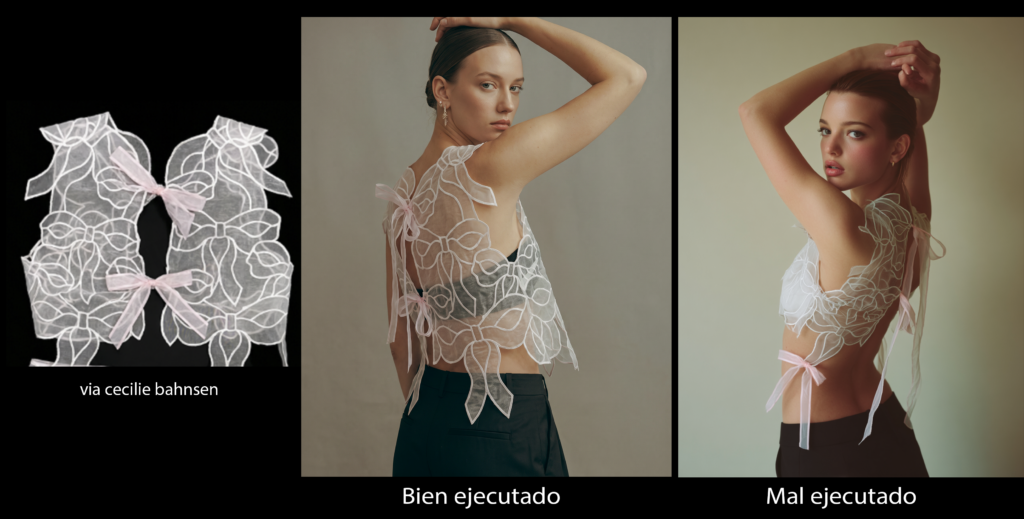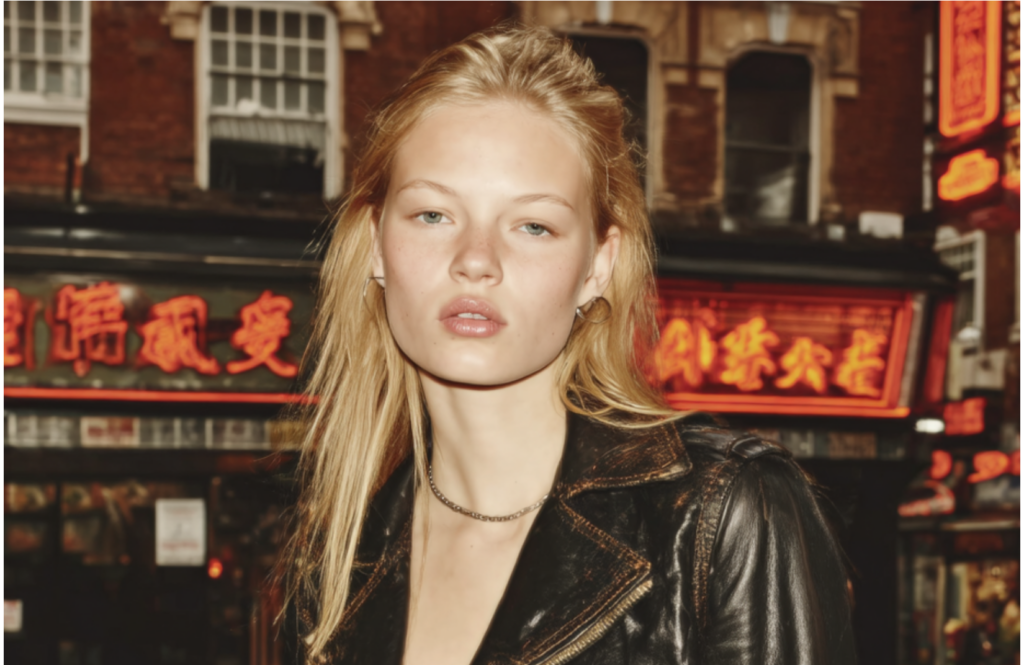
This is not a question of which option is better. Traditional photography and AI imagery do not compete in the abstract, they solve different needs, and the right decision depends on the specific case in front of you, not on a general preference for one technology or another.
Before deciding, it helps to break the question into concrete variables instead of trying to answer it all at once. These are the ones that really move the decision:
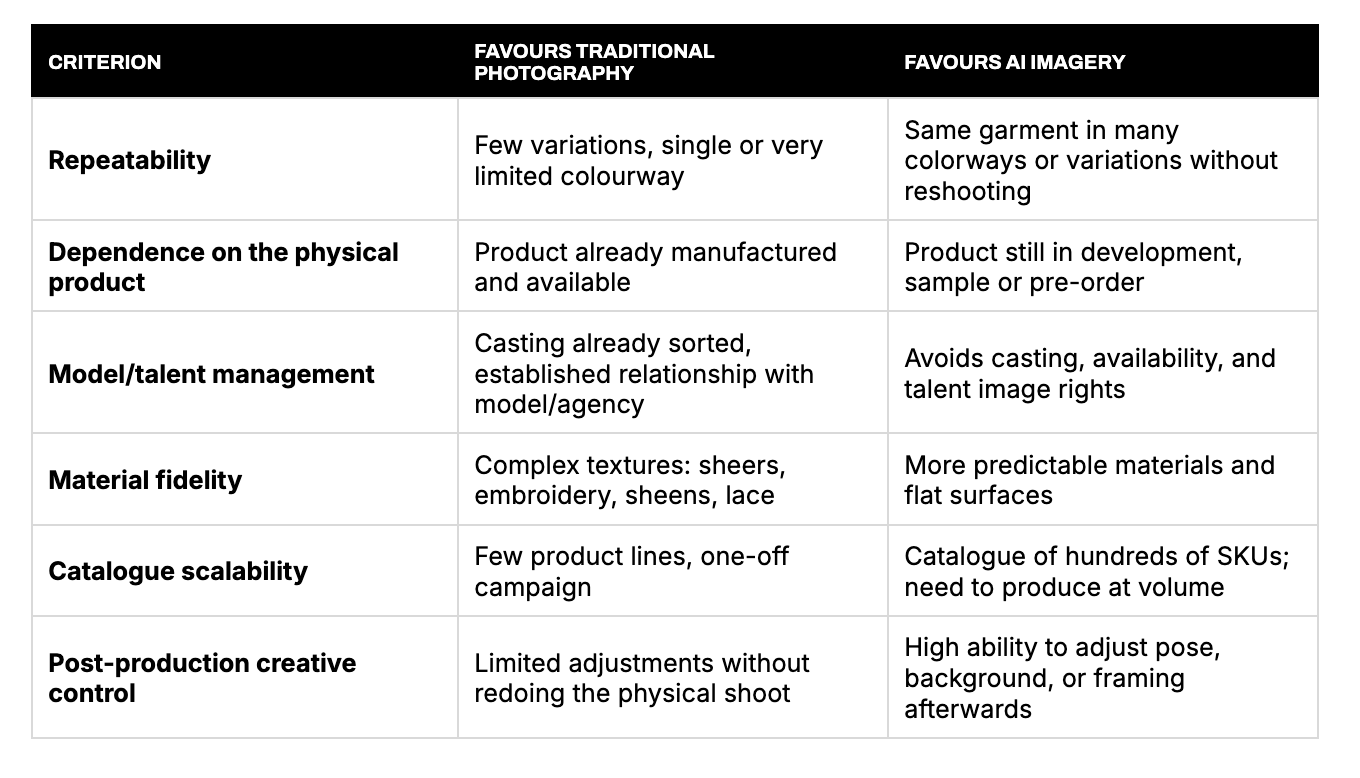
Three cases to illustrate it.
A haute couture house with physical production already finished, a small catalogue and a need for very fine creative control in each image still finds traditional photography the most natural option, especially when the material has a complexity (embroidery, lace, sheers) that is still where AI fails most often.
A brand launching on pre-order, without the physical garment manufactured yet but with the digital sample ready, that needs to show it in several colourways before confirming production, finds AI the only viable option at that point: there is no physical garment to photograph.
A DTC brand with a catalogue of several hundred product lines that needs to refresh its seasonal imagery without multiplying the production budget for each SKU finds in AI the way to scale, as long as it reserves judgement and human review for the pieces with the most material complexity.
Most brands are not at any of these three extremes, they are somewhere in between, and that is where it makes sense to combine the two: traditional photography for the hero pieces and the most complex ones, AI for the rest of the catalogue and for the variations that were not viable before on budget.
| This article reflects the state of AI tools as of August 2026. Given the pace of change in the sector, some of the features or tools mentioned may have changed since then. |